Vinyl, CD or Stream: What Each Format Actually Offers
Vinyl, CD or stream each shape listening differently. Compare ownership, handling and convenience to choose a format that fits your habits.
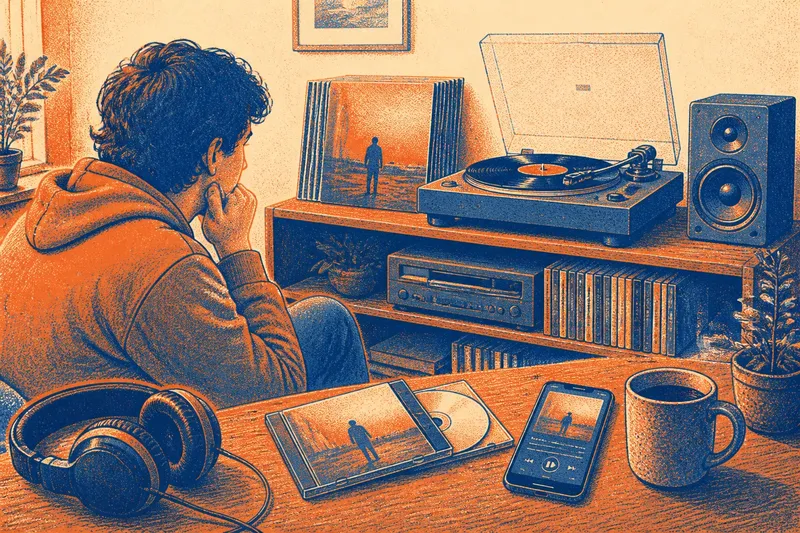
You set a record on the turntable, reach for the sleeve, and realize you have not checked whether the right side is facing up. Vinyl, CD or stream: the format changes more than how music reaches your speakers. It changes what you own, what you handle, and how easily a listening session fits into an ordinary day.
There is no need to pick one format for every situation. Compare what each asks of you, then decide which trade-offs suit the way you listen.
What ownership means
A vinyl record or CD is a physical object you can keep, lend, display, and play without opening a music service. That sense of possession has practical limits: the disc can be lost or damaged, and playback depends on having compatible, working equipment. A purchased download is a digital file you keep under the seller’s terms, while a streaming subscription usually provides access for as long as the service and your account permit it.
Streaming is convenient, but access is not the same as ownership. A track may become unavailable, and offline listening may depend on the service’s app, account status, and download rules. If a particular album matters to you, check whether the format gives you lasting access in the way you expect.
Physical editions can also carry meaning beyond the audio: artwork, liner notes, credits, and the pleasure of having an album on a shelf. Those details vary by release, so inspect the edition rather than assuming every pressing or disc includes the same material.
Handling changes the session
Vinyl asks for deliberate handling. You take the record from its sleeve, place it on a turntable, lower the stylus, and usually turn the record over partway through an album. Dust and careless contact can affect playback, so a clean sleeve and gentle handling are part of the routine. For some listeners, that small sequence helps make listening feel like an activity; for others, it interrupts the music.
A CD involves less setup. Open the case, place the disc in a player, and press play. You still need to store it and keep the playing surface free of scratches, but it is easier to carry between rooms or take on a trip than a record. A disc player, car stereo, or computer with a compatible drive may provide options that streaming cannot, depending on the equipment you have.
Streaming removes most handling. Open an app and choose a track, album, or playlist. You can move between music quickly, but the library lives inside an interface: saved albums, playlists, and recommendations may feel less tangible than a row of records or discs. Organizing a digital collection can take its own attention, especially if you switch services or rely on several apps.
Convenience has different forms
Streaming is often the simplest choice when you want music immediately, want to sample unfamiliar artists, or listen across several devices. It can also work offline when a service allows downloads and you prepare them in advance. If connectivity is unreliable, an offline download or physical copy may be more dependable for a planned session.
Vinyl is less suited to quick, hands-busy listening. It needs a turntable and a stable place to use it, and changing sides means returning to the player. Yet that limitation can be useful if you want to sit with an album rather than skip among tracks. The format makes the session’s boundaries visible.
CDs sit between those habits. They make it easy to play a complete album without a subscription or network connection, while offering quicker track access than flipping a record. A portable CD player can add mobility, but it is another device to carry and keep powered. The best fit depends on which inconvenience you would rather accept.
Choose playback deliberately
The format is only one part of the listening experience. A record needs a turntable and cartridge; a CD needs a compatible player or drive; streaming needs a supported device and service. Existing equipment matters. If you already have a CD player in a stereo you enjoy, using CDs may be simpler than buying a turntable or arranging a new streaming setup.
Playback controls also differ. A turntable usually gives you physical buttons or a tonearm to manage, while a CD player offers direct controls and often a remote. Streaming apps make searching and queueing easy, but app layouts and available controls vary. A compact speaker, headphones, or a full stereo can change how comfortable each method feels, so consider the setup you actually use rather than an imagined ideal.
Imagine you own a favorite album on CD, but want to hear it while cooking and later on a train. You could keep the disc for a focused home session and use a streaming service for mobile access, if the album is available there. The observable result is a routine that uses each format for the setting it handles more easily, without forcing one to replace the other.
Common format questions?
Does a physical copy work without internet?
Vinyl and CDs do not need an internet connection, but they do require the appropriate player. Streaming can work offline when the service supports downloads and the files have been saved ahead of time.
Is a stream the same as owning a download?
No. A stream generally provides access through a service, while a purchased download is a file you retain under the seller’s terms. Check those terms and any device restrictions before treating a digital purchase as a permanent archive.
Which format is easiest to share?
A streaming link is quick to send, though the recipient may need an account or access to that service. A CD can be handed to someone, while a record is better suited to sharing in person with a turntable available.
Do I need to choose only one?
No. Many listeners use a physical format for albums they want to keep and streaming for discovery or background listening. Let the job of each format guide the choice.
Match format to habit
Before buying equipment or building a collection, ask yourself a few practical questions:
- Do I want a lasting object? Consider a record or CD for the album, artwork, and notes you want to keep.
- Do I change tracks often? Streaming or a CD player may make selection easier than using a turntable.
- Where will I listen? Match the format to the player and space you already have.
- Will I listen without a connection? Consider a physical copy or prepare permitted offline downloads.
- Do I enjoy handling the music? If sleeves, discs, and album sequences appeal, physical media may make listening more satisfying.
- How much upkeep suits me? Vinyl needs more careful handling; streaming needs an account and a working app; CDs need safe storage and a compatible player.
Not worth the effort: buying every edition of an album just to settle an abstract argument about formats. Start with the listening situation that actually frustrates you, then add a format only if it solves that problem.
Vinyl, CD or stream is a useful question when it points to a real preference: keeping an album, handling a physical copy, or reaching music quickly. Choose for the moments you want to make easier. If your habits change, your format mix can change with them.